Table of Contents
ToggleCraftsman style kitchen cabinets remain one of the most popular design choices for homeowners who value durability, honest construction, and understated elegance. Unlike trendy kitchen styles that cycle in and out, craftsman cabinetry has held strong appeal for over a century, and it’s still going strong in 2026. The beauty of this approach lies in its practical philosophy: quality materials, visible joinery, and purposeful design that works as hard as it looks. Whether someone is planning a full kitchen renovation or upgrading cabinets in a dated space, craftsman style offers the flexibility to blend traditional craftsmanship with modern convenience and storage solutions.
Key Takeaways
- Craftsman style kitchen cabinets prioritize visible joinery, natural wood tones, and frame-and-panel construction that emphasizes honest, functional design over ornate ornamentation.
- Traditional wood species like oak, hickory, and cherry are ideal for craftsman cabinetry, paired with matte or satin finishes that highlight grain and require appropriate protective coatings like water-based or conversion varnish.
- Hardware selection should be purposeful and understated—bronze cup pulls and bin pulls reinforce the built-to-work philosophy while avoiding shiny chrome or overly decorative elements.
- A cohesive craftsman kitchen balances cabinetry with complementary elements like subway tile backsplash, butcher block or granite countertops, and pendant lighting with visible hardware or frosted glass.
- Budget-conscious homeowners can refresh existing cabinets with soft-color paint, quality hardware upgrades, and selective open shelving starting at $300–$800, while custom craftsman cabinets range from $2,500–$8,000+ but hold value and resist dating over time.
- Craftsman kitchen cabinets deliver long-term value through durability, timeless appeal, and easier repairs compared to modern integrated systems, making them a smart investment that enhances resale value over 15–20 years.
What Defines Craftsman Style Kitchen Cabinets
Craftsman style kitchen cabinets draw their lineage from the Arts and Crafts movement of the early 1900s, emphasizing handmade quality and rejection of mass production. The core philosophy centers on visible construction, natural materials, and functional design without unnecessary ornamentation.
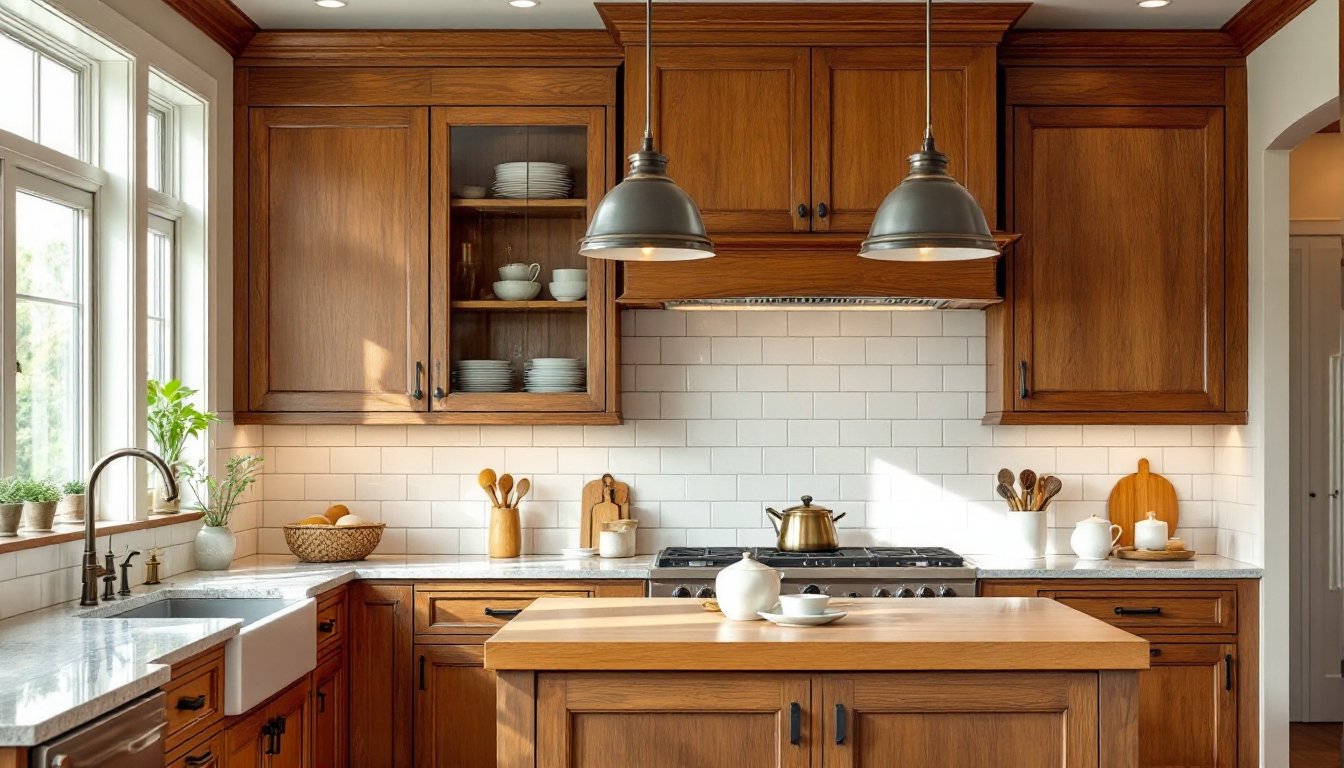
In the kitchen, this translates to clean lines, frame-and-panel door construction, and an emphasis on the wood grain itself rather than ornate carvings. A homeowner will typically see recessed panels (also called raised panels), where the center of the door sits slightly below the frame, a hallmark of authentic craftsman design. The cabinet boxes themselves often feature visible wood joinery or dovetail joints, though modern versions may use dowels or pocket holes that achieve the same strength with less cost.
Craftsman cabinetry rejects high gloss finishes and ultra-modern minimalism. Instead, it celebrates wood tones in medium to dark ranges, matte or satin finishes, and hardware that looks purposeful rather than decorative. The overall effect feels substantial, built to last, and honest about how it’s constructed. This aesthetic pairs naturally with craftsman-style kitchen islands, open shelving, and backsplashes made from subway tile or natural stone.
Key Design Features and Materials
Wood Selection and Finishes
The wood species chosen for craftsman kitchen cabinets directly affects both appearance and durability. Oak (red or white) and hickory are traditional choices, they’re widely available, moderately priced, and accept stain beautifully with visible grain patterns. Maple is harder and takes a smoother finish, making it excellent for painted craftsman cabinets in soft whites or grays. Cherry offers a richer, warmer tone that deepens over time, though it costs more and is less forgiving if someone wants to change the finish later.
Most production craftsman cabinets use plywood box construction with solid wood face frames and stiles. A face frame is the solid wood skeleton visible on the cabinet front, this is what defines a framed cabinet versus a frameless European-style design. Inset hinges (where the door sits inside the frame plane) are more common in true craftsman work than overlay hinges, though modern versions often use overlay for easier installation and adjustment.
Finish options matter significantly. Oil-based polyurethane provides depth and warmth but requires ventilation and longer dry times. Water-based polyurethane dries faster and has lower VOCs, though it can look slightly plastic unless applied carefully. Many builders use two-part conversion varnish for kitchen cabinets, it’s durable, levels smoothly, and resists water better than single-stage finishes. Stain color should match the overall kitchen palette: honey, golden oak, and dark walnut are classic craftsman choices that work across traditional and transitional spaces.
Hardware and Decorative Details
Hardware is where craftsman style shows personality without becoming fussy. Cup pulls in bronze, oil-rubbed bronze, or brushed nickel are standard, they’re functional, not flashy, and they reinforce the honest, built-to-work philosophy. Bin pulls (flat, elongated pulls) and leather-wrapped handles also fit the aesthetic. Avoid shiny chrome, ornate crystal knobs, or anything that looks purely decorative: the hardware should indicate where to grab and hint at quality materials.
Decorative details should serve a function or at least feel substantial. Toe kicks (the recessed space at the cabinet base) are typically 4–6 inches tall and match the cabinet color. Some designs include visible corbels under open shelves or supporting the island edge, these are both structural and visual anchors. Glass-front doors on upper cabinets are optional but common: they break up solid cabinet runs and allow display of dishware or glassware without the cabinet feeling heavy.
Beadboard paneling on the sides of islands or inside glass doors adds subtle texture and is very on-brand for craftsman work. Crown molding at the top is optional, some purists skip it for a cleaner look, while others frame it as a finishing detail that ties the cabinets to ceiling height and wall color.
Creating a Cohesive Craftsman Kitchen Layout
A well-designed craftsman kitchen balances cabinetry with other elements. The cabinets themselves should occupy the dominant visual role, aim for wall cabinets that reach 30–36 inches below ceiling height, leaving room for lighting, trim, or open shelving. Base cabinets are standard 36 inches tall and 24 inches deep, though counterdepth options exist for smaller spaces.
Layout should prioritize the work triangle: sink, stove, and refrigerator positioned to minimize steps without crowding. An island works well in larger kitchens (requiring at least 42–48 inches of clearance on all sides for traffic flow) and provides extra prep space plus seating that reinforces the gathering-place nature of craftsman design.
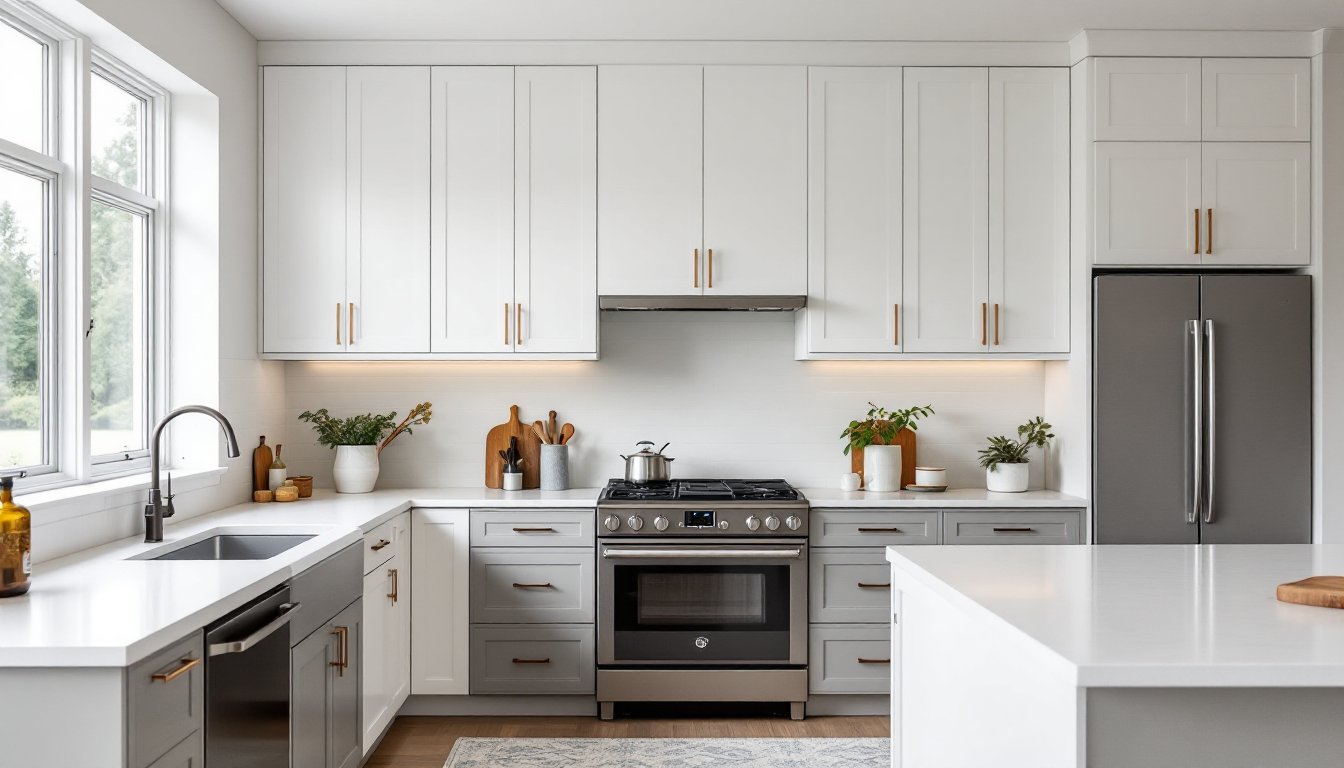
Countertops anchor the whole look. Butcher block, granite, or concrete all pair well with craftsman cabinetry, avoid trendy epoxy or metallic finishes that conflict with the timeless aesthetic. Backsplash should complement, not compete: subway tile in white or light gray, classic metro tile patterns, or solid natural stone all work. Keep grout color neutral (gray or charcoal rather than bright white) to avoid a busy appearance.
Lighting matters more than homeowners realize. Pendant lights over an island should have craftsman-appropriate shades (glass, simple metal, or brushed finishes). Under-cabinet task lighting keeps things functional and reveals the quality of the cabinetry at night. Avoid overly modern recessed lighting in favor of fixtures with visible hardware or frosted glass, which align better with the overall feel.
Budget-Friendly Options and Long-Term Value
Full custom craftsman cabinetry from a local builder or fine cabinet maker runs $4,000–$8,000+ for an average kitchen, depending on wood species, finish, and hardware. Semi-custom options from companies like Kraftmaid or Schrock start around $2,500–$4,000 and offer more flexibility in size and configuration than stock. Stock cabinets from big-box retailers are the most affordable at $1,500–$2,500 but often feel lighter in construction and offer fewer design options.
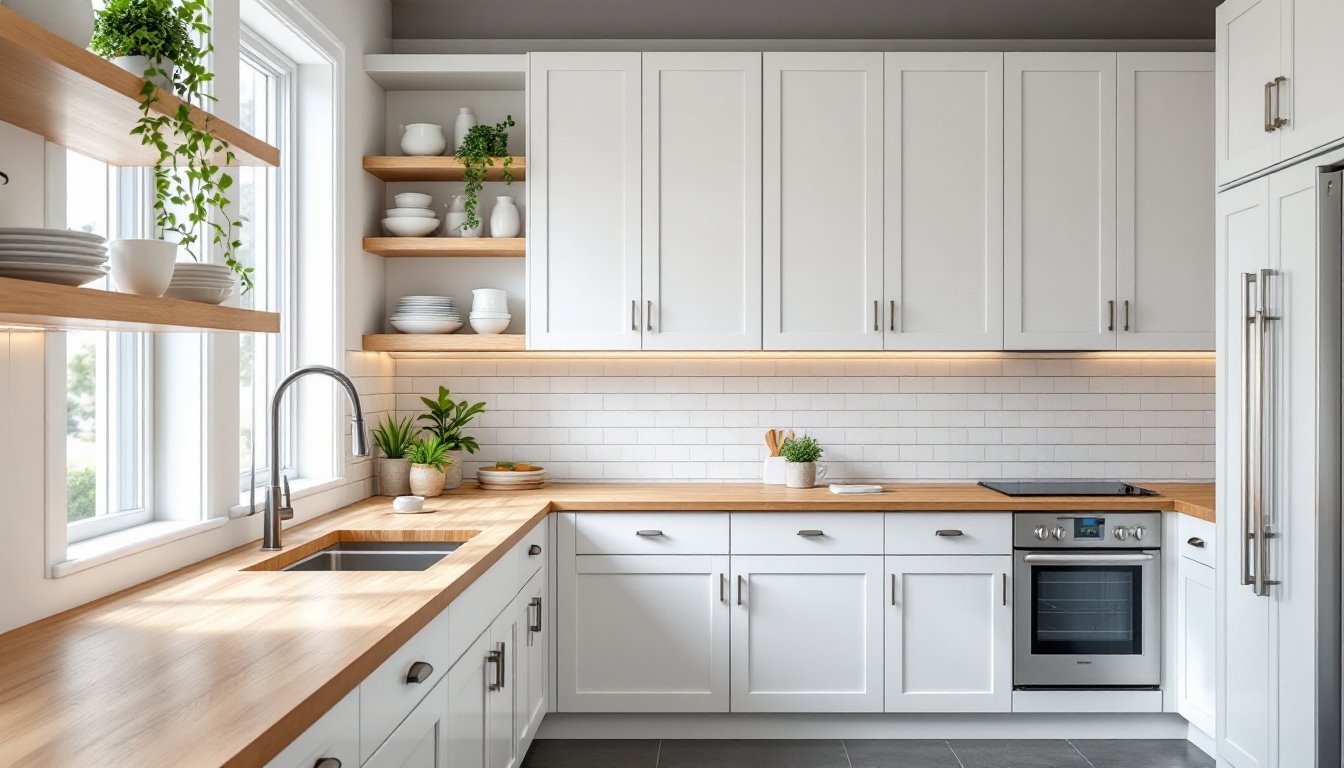
For a budget-conscious approach, consider painting existing cabinets in a soft craftsman-appropriate color (whites, warm grays, sage green) and replacing hardware and interior organization. A $300–$800 hardware refresh, new hinges, pulls, and soft-close mechanisms, can transform basic cabinets into something that feels more intentional. Add open shelving in one or two spots rather than converting entire runs, keeping costs down while adding visual interest.
Craftsman cabinets hold value because they transcend trends. A kitchen with well-built, timeless cabinetry doesn’t feel dated after five years like ultra-modern designs sometimes do. When it’s time to sell, buyers see quality and longevity, which translates to better resale value than budget options that look worn or dated. Over a 15–20 year window, investing in better cabinetry pays dividends in durability and appeal. Repairs are also more manageable, a loose hinge or worn drawer slide can be fixed without replacing the entire cabinet, unlike some modern integrated systems.
Conclusion
Craftsman style kitchen cabinets remain a smart, enduring choice for homeowners who value substance over trends. They’re built to last, designed to be functional, and attractive without requiring constant updating. Whether choosing full custom work, semi-custom options, or refreshing existing cabinetry with thoughtful finishes and hardware, the craftsman approach prioritizes honest construction and timeless appeal. By investing in quality materials, selecting appropriate wood species and finishes, and keeping the overall kitchen design cohesive, a homeowner builds a kitchen that works beautifully today and ages gracefully for decades to come.