Table of Contents
ToggleMission style kitchen cabinets have remained a strong choice for homeowners who value durability, clean lines, and craftsman-inspired aesthetics. Unlike trendy designs that fade in a few years, mission cabinetry holds its ground, visually and structurally, through decade after decade of use. Whether someone is doing a full kitchen renovation or updating existing cabinetry, understanding mission style helps them make informed choices about wood selection, hardware, and integration with the rest of their kitchen. This practical guide covers what defines mission style, how to build or install it properly, and whether the investment makes sense for a specific home and budget.
Key Takeaways
- Mission style kitchen cabinets feature frame-and-panel construction with solid hardwood, clean lines, and minimal ornamentation that delivers both timeless aesthetics and practical durability.
- Solid wood materials like quarter-sawn oak, cherry, and walnut combined with proper joinery (mortise-and-tenon or doweled joints) ensure mission cabinets last 20–30+ years compared to 10–15 years for particleboard alternatives.
- Mission style adapts well to transitional, contemporary, and traditional kitchens when paired with complementary countertops, backsplashes, and simple hardware in oil-rubbed bronze or satin finishes.
- Semi-custom mission cabinetry costs $150–$300 per linear foot, while fully custom builds run $300–$600+ per linear foot, but the long lifespan and minimal maintenance make the investment competitive over time.
- Proper installation with professional measurement, shimming, and secure wall anchoring is essential to ensure mission kitchen cabinets perform reliably and maintain their refined appearance for decades.
What Are Mission Style Kitchen Cabinets?
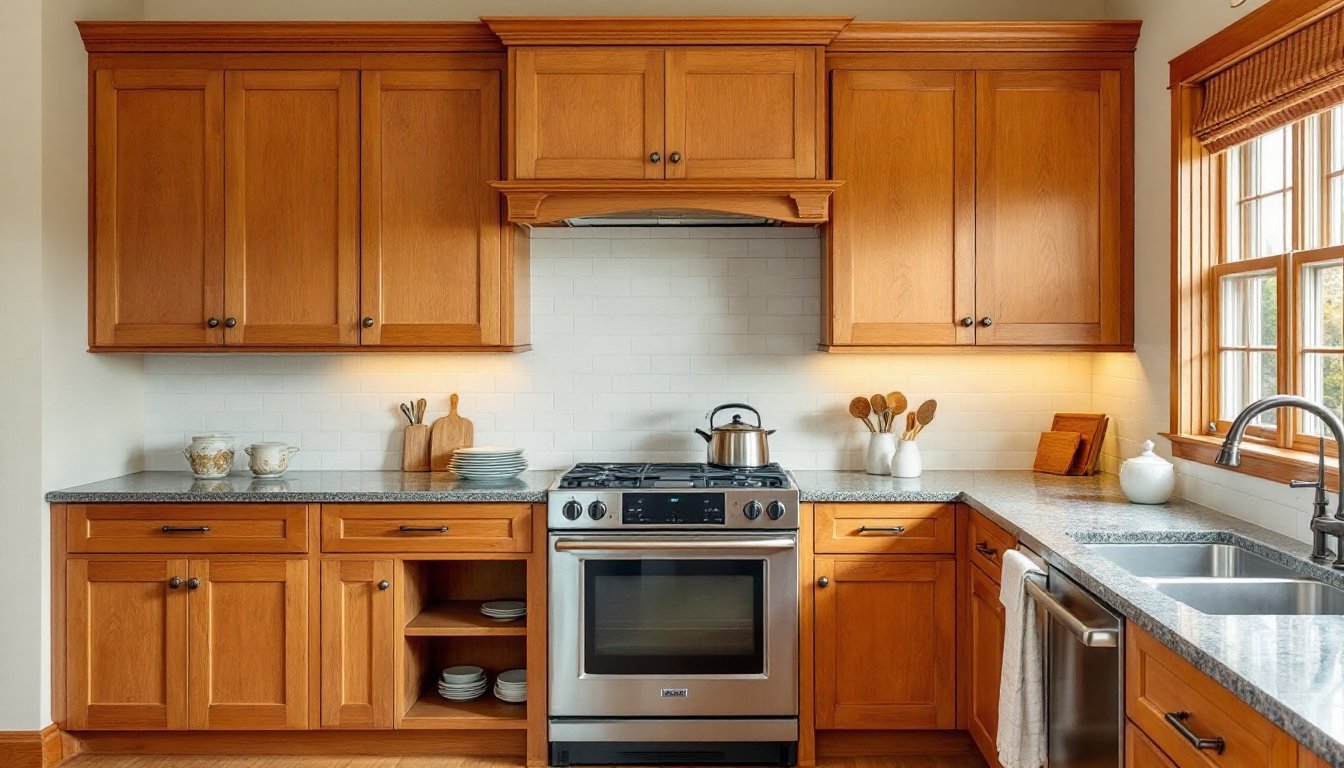
Mission style cabinets trace their roots to the Arts and Crafts movement of the late 1800s and early 1900s. The design philosophy emphasizes honest construction, visible joinery, and minimal ornamentation. In kitchen terms, this means recessed or flat-panel cabinet doors with solid frames, typically made from quarter-sawn oak, cherry, or walnut.
The signature element is the frame-and-panel door construction. A solid frame (called stiles on the sides and rails on the top and bottom) surrounds a recessed panel. The panel can float slightly in grooves, allowing wood to expand and contract seasonally without cracking the overall door.
Mission cabinetry rejects decorative trim, applied moldings, and high-gloss finishes. Instead, the wood grain and solid construction are the decoration. This simplicity makes mission cabinets feel modern and timeless at the same time, a key reason why they’ve remained popular through kitchen design cycles. Homeowners appreciate that mission style works with traditional, transitional, and even contemporary interiors when paired with the right countertops, backsplash, and hardware.
Key Design Features and Materials
Mission style cabinets rely on specific construction details and material choices to deliver their characteristic look and durability.
Wood Selection
Quarter-sawn oak is the classic choice, recognizable by its distinctive fleck pattern and warm golden tone. It’s readily available and finishes well. Cherry offers a deeper, richer color that darkens over time. Walnut is denser and more expensive but produces the most refined appearance. Maple works too, though it’s lighter and less grain-forward than the traditional options.
All of these are solid hardwoods, avoid veneered panels if durability matters, especially in a working kitchen where cabinet doors endure daily use, moisture from cooking, and the occasional bump.
Construction Standards
Frame joints should be mortise-and-tenon or doweled for strength. Budget-friendly cabinetry sometimes uses pocket holes (also called Kreg joinery), which work but aren’t as traditional or as visually appealing if edges are ever exposed. Doors should be at least 3/4-inch thick solid wood: anything thinner feels cheap and flexes when opened.
The panel should float inside grooves in the frame rather than being glued solid, allowing for seasonal wood movement. Face frames, the perimeter of solid wood that surrounds cabinet boxes, should be full-width and visible, not hidden or veneered over particleboard.
Hardware and Finishes
Mission style pairs best with simple, functional hardware in oil-rubbed bronze, satin nickel, or matte black. Avoid ornate brass pulls, crystal knobs, or anything with cutouts or decorative details. Look for cup pulls (D-shaped handles) or simple bar pulls in 3-inch to 5-inch lengths.
Finish options include natural stains (medium to dark brown tones highlight the wood grain), hand-rubbed oil finishes, or matte lacquer. Some builders prefer lacquer for durability in a kitchen environment, it resists fingerprints and moisture better than oil alone. High-gloss finishes contradict the mission aesthetic, so avoid them.
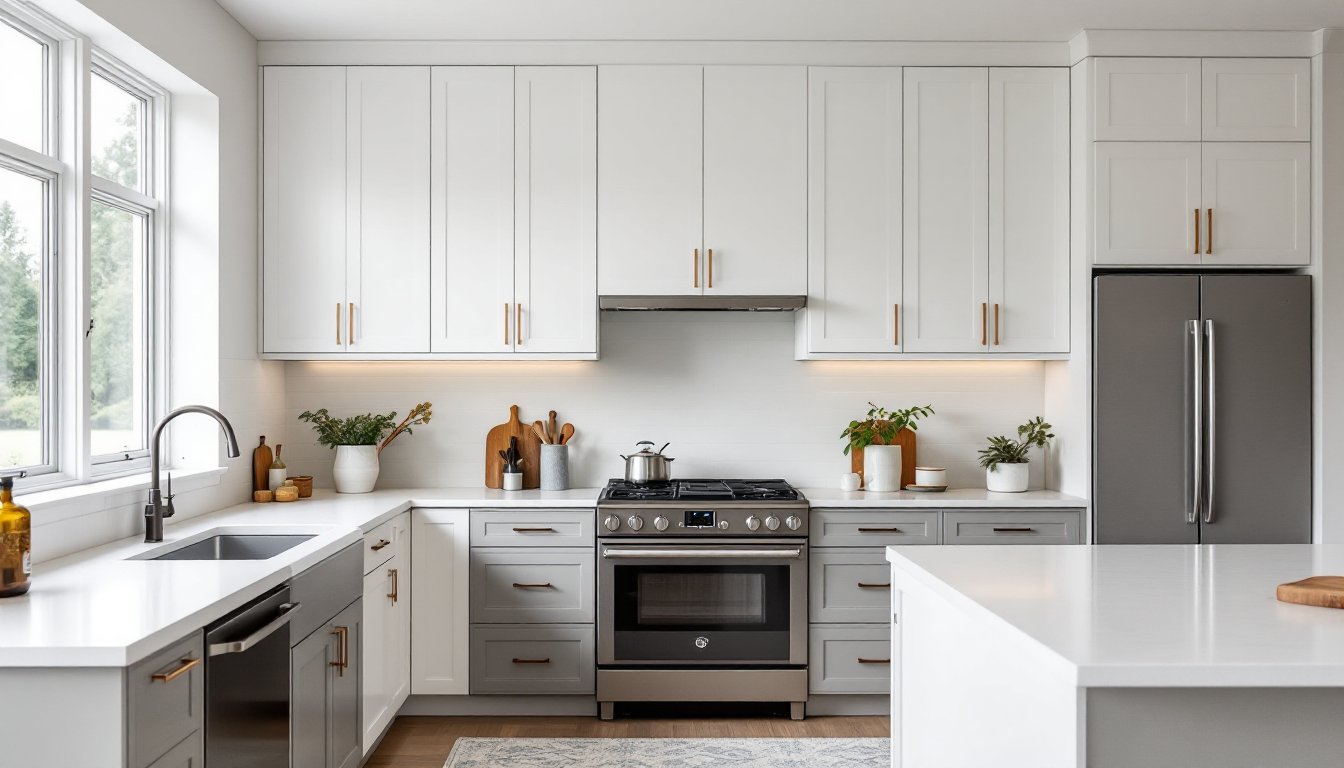
Door frames and toe kicks should be left unfinished or stained to match the rest of the cabinetry. Painted mission cabinets exist but shift the look toward farmhouse or cottage style, losing the wood-forward character that makes mission distinctive.
Benefits of Choosing Mission Style Cabinets
Mission style delivers several practical and aesthetic advantages that justify its continued popularity.
Longevity and Durability
Solid wood construction and timeless proportions mean mission cabinets don’t look dated in five years. The design is spare enough that it doesn’t rely on surface finishes or applied details that chip, peel, or wear. Unlike flat-panel or shaker styles with exposed edges prone to dings, the recessed panel design on mission doors hides minor damage.
Versatility
Mission style pairs with various kitchen aesthetics. Pair it with stone countertops and stainless steel appliances for a transitional look. Use it with a farmhouse sink, open shelving, and vintage lighting for cottage charm. Add white subway tile and black hardware for a modern twist. The neutral, wood-forward aesthetic provides a foundation that accommodates different design directions.
Resale Value
Kitchens with solid-wood, well-constructed cabinetry hold their appeal to potential buyers. Mission style doesn’t scream any particular trend, which means it won’t feel dated in ten years. This matters if someone plans to sell their home, a custom mission cabinet installation is a visible, tangible upgrade that doesn’t require justification to future owners.
Repairability
If a door joint loosens or a hinge needs replacing, mission cabinets can be serviced by a competent carpenter or the homeowner. Glued-up veneered boxes and particleboard cannot. Stain or finish touch-ups are straightforward on solid wood with standard finishes.
How to Integrate Mission Style Into Your Kitchen
Integrating mission style cabinetry successfully involves planning layout, selecting complementary materials, and understanding installation requirements.
Layout and Appliance Integration
Mission cabinets work best when appliances (range, refrigerator, dishwasher) are framed by full-width cabinet runs. A narrow strip of cabinetry looks awkward: mission style thrives in generous, unbroken runs. Plan for open shelving or glass-door uppers if the kitchen design calls for it, mission-style open shelves with clean edges complement solid lower cabinets.
If integrating an island, it should follow the same construction standards and wood species as perimeter cabinets. A mismatched island breaks the cohesiveness that mission style demands.
Countertops and Backsplash
Quartz, granite, soapstone, or butcher block pair well with mission style. Avoid high-gloss laminates or anything with bold patterns that compete with the wood. A simple subway tile backsplash or neutral stone keeps focus on the cabinetry. Grout color matters, darker grout (charcoal, slate) reads cleaner than light gray or white.
Installation and Permits
Mission-style cabinets, whether custom-built or semi-custom from a retailer, require precise installation. Unlike modular RTA (ready-to-assemble) cabinets, these demand careful measurement, shimming to level, and secure anchoring to wall studs. Plan for professional installation unless the homeowner has experience with cabinetry.
In most jurisdictions, cabinetry itself doesn’t require a permit, but electrical and plumbing changes that accompany a kitchen renovation do. Always pull permits for work involving the electrical system or water lines.
Cost Considerations and Value
Mission style kitchen cabinets range widely in price depending on material, construction method, and whether they’re custom or semi-custom.
Semi-Custom and Stock Options
Semi-custom cabinetry, like that from companies focused on mission design, typically runs $150–$300 per linear foot installed. A 15-foot run of lower cabinetry costs roughly $2,250–$4,500 before countertops or backsplash. Stock options (mass-produced, limited configurations) may cost less but sacrifice quality and customization.
Custom Built Cabinetry
Fully custom cabinets made by a local builder or fine woodworking shop run $300–$600+ per linear foot, depending on wood species, complexity, and local labor costs. High-end cherry or walnut with detailed finishing pushes into the higher range. This investment pays dividends in durability, fit, and the ability to design around specific kitchen challenges (angled ceilings, odd wall dimensions, appliance openings).
Value Over Time
Cost isn’t just the initial outlay. Solid wood cabinets last 20–30+ years with normal use. RTA or particleboard-core cabinetry often requires replacement in 10–15 years. Spreading the cost over lifespan makes mission style competitive. Also, homeowners save on replacement if mission cabinets remain functional while only refinishing or re-staining is needed, a $2,000–$4,000 refresh instead of a $20,000+ replacement.
Budget constraints are real. If custom work isn’t feasible, semi-custom mission-style options from established retailers offer better value and durability than cheap modular units.
Conclusion
Mission style kitchen cabinets represent a practical choice that combines solid construction, timeless aesthetics, and genuine durability. They’re not trendy, they’re foundational. For homeowners planning a kitchen renovation or upgrade, mission style delivers the versatility to work with various design directions while offering longevity that justifies the investment. Whether building custom or selecting semi-custom options, prioritizing solid hardwood construction, proper joinery, and quality finishing ensures these cabinets will perform and look good for decades.